Albert Einstein
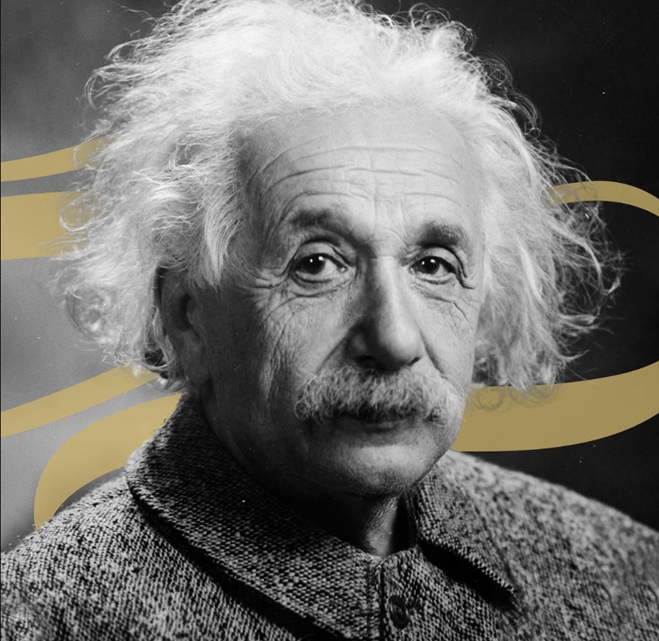
Albert Einstein (1879–1955) was a German-born theoretical physicist and one of the most influential scientists in modern history. Born on March 14, 1879, in Ulm, in the German Empire, Einstein revolutionized our understanding of space, time, gravity, and energy through his groundbreaking theories of relativity. He became internationally famous for his equation E = mc², which established the relationship between mass and energy.
Einstein developed many of his most important scientific ideas during the early 20th century. In 1905, often called his “miracle year,” he published several influential papers covering the photoelectric effect, Brownian motion, special relativity, and mass-energy equivalence. His explanation of the photoelectric effect earned him the Nobel Prize in Physics in 1921, recognizing his contribution to theoretical physics.
In 1915, Einstein presented his general theory of relativity, proposing a new understanding of gravity in which massive objects curve spacetime. The theory gained worldwide attention after observations of the 1919 solar eclipse provided evidence supporting Einstein's predictions about the bending of light. He subsequently became one of the most recognizable intellectual figures of the 20th century.
Einstein also wrote extensively about science, philosophy, education, pacifism, and social issues. After the rise of the Nazi regime in Germany, he moved to the United States in 1933 and accepted a position at the Institute for Advanced Study in Princeton, New Jersey. He continued his scientific work and public advocacy until his death on April 18, 1955.
Today, Albert Einstein remains a symbol of scientific creativity and intellectual curiosity. His theories fundamentally transformed modern physics and continue to influence research in cosmology, astrophysics, and quantum science. His life and work have made him one of the most celebrated scientists in the history of science.