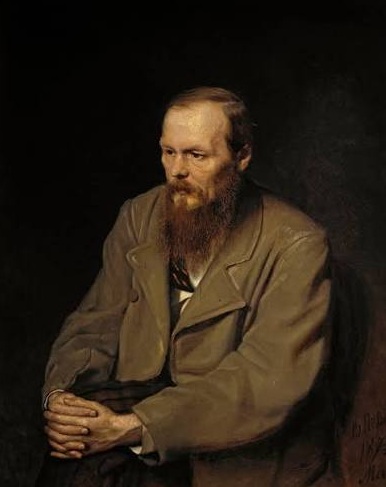
Fyodor Dostoevsky
Fyodor Dostoevsky (1821–1881) was a Russian novelist, philosopher, and one of the most influential figures in world literature. Born on November 11, 1821, in Moscow, Russia, Dostoevsky is celebrated for his profound exploration of psychology, morality, faith, guilt, suffering, freedom, and the complexities of human nature. His novels had a lasting influence on modern literature, philosophy, and psychological fiction.
Dostoevsky studied engineering before dedicating himself to literature. His first novel, Poor Folk, was published in 1846 and quickly established him as a promising young writer. However, his life changed dramatically in 1849 when he was arrested for participating in a literary discussion group considered politically suspicious by the authorities. He was sentenced to death, but his execution was dramatically cancelled at the last moment. He was then sent to a Siberian prison camp, an experience that profoundly influenced his later writing.
Among Fyodor Dostoevsky's most famous works are Crime and Punishment, The Idiot, Demons, The Gambler, and The Brothers Karamazov. His novels often focus on characters facing extreme moral and psychological conflicts. Crime and Punishment examines guilt, crime, redemption, and conscience through the story of Raskolnikov, while The Brothers Karamazov explores faith, doubt, family conflict, morality, and the problem of suffering.
Dostoevsky's writing is particularly notable for its psychological depth and its use of complex, often contradictory characters. He explored philosophical questions through dramatic conversations and intense personal struggles, addressing issues such as free will, responsibility, religion, nihilism, and the search for meaning. His approach to character psychology influenced generations of writers and thinkers, including philosophers and psychologists.
Fyodor Dostoevsky died on February 9, 1881, in Saint Petersburg, Russia, at the age of 59. Today, he is regarded as one of the greatest Russian authors and one of the most important novelists in literary history. His works remain widely read for their powerful psychological insight, philosophical depth, emotional intensity, and timeless examination of guilt, faith, suffering, morality, and the human condition.