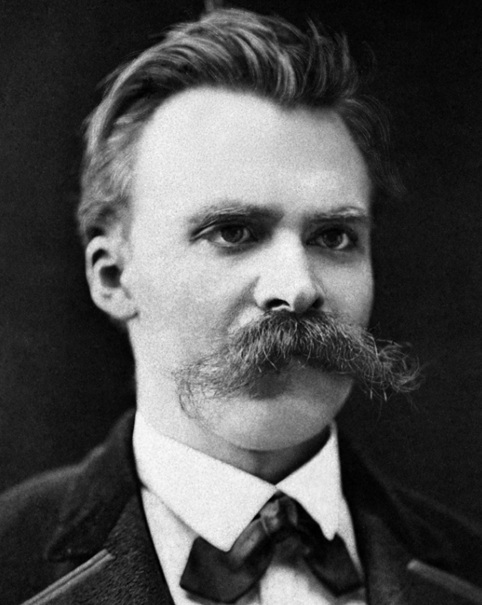
Friedrich Nietzsche
Friedrich Nietzsche (1844–1900) was a German philosopher, cultural critic, poet, and philologist whose ideas profoundly influenced modern philosophy, literature, psychology, and intellectual history. Born on October 15, 1844, in Röcken, Prussia, Nietzsche challenged many traditional assumptions about morality, religion, truth, culture, and human existence. His distinctive writing style, combining philosophical arguments, aphorisms, poetry, and provocative observations, made him one of the most widely discussed thinkers of the modern era.
Nietzsche demonstrated exceptional academic ability from an early age and became a professor of classical philology at the University of Basel when he was only 24. His early work focused on ancient Greek culture and philosophy, but he soon developed a broader critique of Western civilization. His writings frequently examined how individuals create meaning and values in a world where traditional sources of certainty may no longer provide convincing answers.
Among Friedrich Nietzsche's most important works are Thus Spoke Zarathustra, Beyond Good and Evil, On the Genealogy of Morality, The Gay Science, and Twilight of the Idols. His philosophical concepts include the “will to power,” the Übermensch, eternal recurrence, and his famous declaration concerning the “death of God.” These ideas are complex and have been interpreted in many different ways, but they share Nietzsche's broader interest in questioning inherited values and encouraging individuals to examine the foundations of their beliefs.
Nietzsche's philosophy was highly critical of conventional morality and organized religion, particularly Christianity, which he believed had shaped European values in ways that could discourage individual strength and creativity. He also emphasized self-overcoming, intellectual independence, artistic creation, and the importance of developing one's own values. His works often deliberately challenge readers rather than offering simple philosophical conclusions.
Nietzsche experienced serious health problems throughout much of his adult life and suffered a severe mental breakdown in 1889. He spent his final years largely unable to continue his intellectual work and died on August 25, 1900, in Weimar, Germany, at the age of 55. Although his ideas were sometimes distorted or misappropriated after his death, Nietzsche's influence on modern philosophy, existentialism, psychology, literature, and cultural criticism remains profound. His works continue to inspire debate about morality, freedom, meaning, creativity, and the nature of human existence.