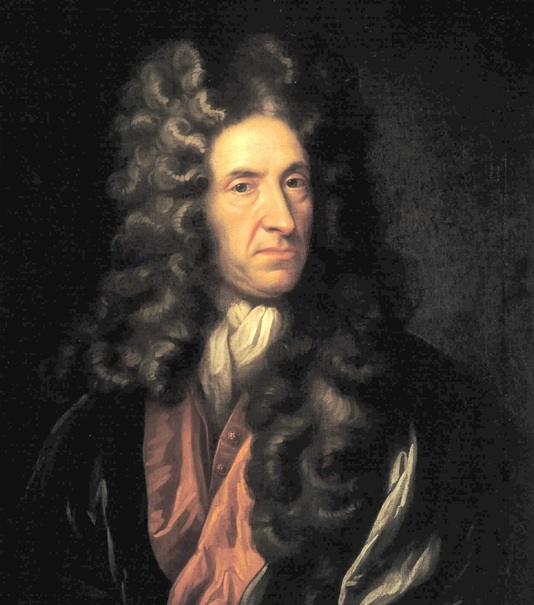
Daniel Defoe
Daniel Defoe (1660–1731) was an influential English writer, journalist, pamphleteer, and political commentator best known for his novel Robinson Crusoe. Born around 1660 in London, England, Defoe became one of the most important figures in the development of English prose fiction. His writing is characterized by realistic detail, straightforward language, adventurous storytelling, and a strong interest in politics, economics, society, religion, and everyday life.
Defoe was born into a family of Protestant dissenters and initially pursued a career as a merchant. He later became involved in political writing and published numerous pamphlets and essays on controversial religious and political issues. His outspoken views sometimes brought him into conflict with the authorities, and in 1703 he was publicly punished for seditious libel. He subsequently worked as a journalist and produced The Review, an influential periodical.
Daniel Defoe began publishing novels relatively late in life. His most famous work, Robinson Crusoe, appeared in 1719 and tells the story of a man who survives a shipwreck and lives for years on a remote island. The novel's detailed portrayal of survival, self-reliance, work, isolation, and resourcefulness helped establish the foundations of the modern adventure novel. Defoe followed it with works such as Captain Singleton and Moll Flanders.
Moll Flanders, published in 1722, follows a woman who experiences poverty, crime, relationships, imprisonment, and social hardship while attempting to survive in a complex society. Defoe's fiction often presents characters who face practical and moral challenges, while his detailed descriptions create a strong impression of realism. His writing style contributed significantly to the development of the English novel.
Daniel Defoe died on April 24, 1731, in London, England, at approximately 70 years of age. His literary influence remains considerable, particularly through Robinson Crusoe, which has become a landmark of English literature and adventure fiction. Today, Defoe is remembered as a pioneering novelist and journalist whose realistic storytelling and interest in ordinary human experiences helped shape the development of modern prose fiction.