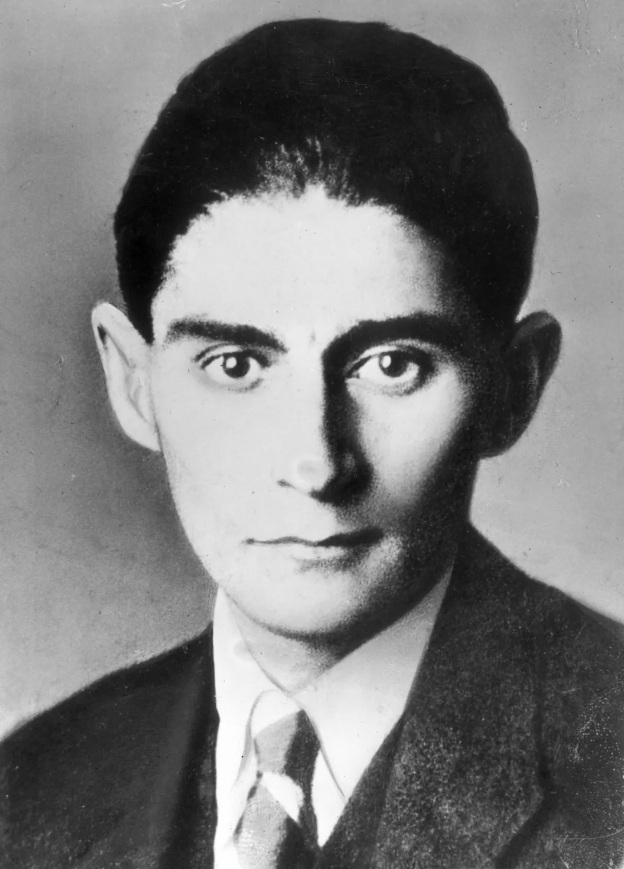
Franz Kafka
Franz Kafka (1883–1924) was a German-speaking Jewish writer from Prague and one of the most influential figures in modern literature. Born on July 3, 1883, in Prague, then part of the Austro-Hungarian Empire, Kafka wrote novels, short stories, and letters that explored themes of alienation, anxiety, bureaucracy, identity, guilt, and the struggle of the individual against incomprehensible forces. His distinctive literary style, now described as “Kafkaesque”, has become synonymous with situations that are surreal, oppressive, confusing, or controlled by seemingly irrational systems.
Kafka studied law at Charles University in Prague and later worked for an insurance company while continuing to write in his spare time. Although he published several works during his lifetime, including The Metamorphosis (Die Verwandlung), The Judgment, and A Hunger Artist, much of his literary fame came after his death. His unfinished novels The Trial and The Castle were published posthumously by his friend and literary executor Max Brod, despite Kafka's reported wish that his unpublished manuscripts be destroyed.
Franz Kafka's writing is renowned for its psychological depth, symbolic imagery, and exploration of the human condition. The Metamorphosis, one of his best-known works, tells the extraordinary story of Gregor Samsa, a man who awakens to find himself transformed into a giant insect. Through this unsettling premise, Kafka examines isolation, family relationships, social expectations, and the loss of human identity.
Kafka died of tuberculosis on June 3, 1924, near Vienna, at the age of 40. Today, his works are considered essential classics of world literature and continue to influence writers, filmmakers, philosophers, and scholars. His books remain widely read for their timeless examination of fear, loneliness, power, and the individual's search for meaning in an often incomprehensible world.