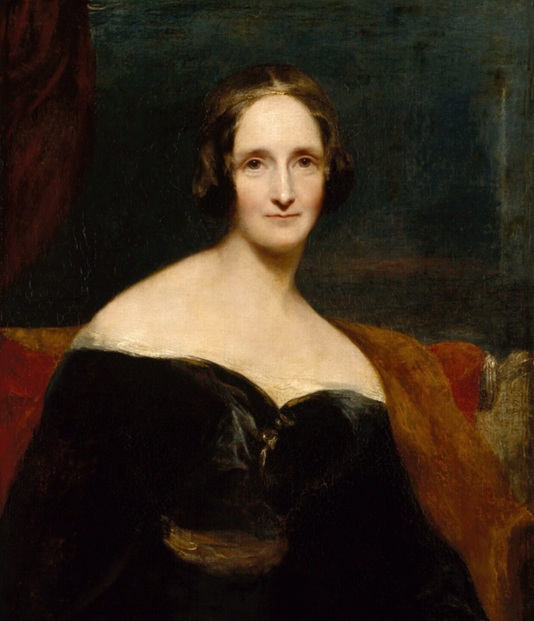
Mary Wollstonecraft Shelley
Mary Wollstonecraft Shelley (1797–1851) was an influential English novelist, short-story writer, and editor best known for writing Frankenstein; or, The Modern Prometheus, one of the foundational works of modern science fiction and Gothic literature. Born on August 30, 1797, in London, England, she was the daughter of philosopher William Godwin and pioneering feminist writer Mary Wollstonecraft. Her literary work explored scientific ambition, responsibility, isolation, identity, prejudice, and the consequences of human actions.
Mary Shelley grew up in an intellectually active family surrounded by influential literary and philosophical ideas. She began a relationship with the poet Percy Bysshe Shelley as a teenager, and the couple traveled extensively through Europe. In 1816, while staying near Lake Geneva in Switzerland with Percy Shelley, Lord Byron, and others, Mary took part in a storytelling challenge that inspired the idea for what would become Frankenstein.
Published anonymously in 1818, Frankenstein tells the story of Victor Frankenstein, a young scientist who creates a living being through an extraordinary scientific experiment. Horrified by his creation, Victor abandons it, leading to a tragic series of events. The novel explores questions about scientific ambition, ethical responsibility, loneliness, prejudice, parental responsibility, and the dangers of pursuing knowledge without considering its consequences.
Beyond Frankenstein, Mary Shelley wrote several other novels, including Valperga, The Last Man, Lodore, and Falkner. The Last Man, published in 1826, is an important early example of apocalyptic and dystopian fiction, depicting a future society devastated by a mysterious plague. Shelley also wrote travel literature, essays, biographies, and edited the works of Percy Bysshe Shelley after his death.
Mary Wollstonecraft Shelley died on February 1, 1851, in London, England, at the age of 53. Her literary reputation has grown considerably since her lifetime, and Frankenstein is now regarded as a landmark of science fiction, Gothic literature, and English literature. Mary Shelley's imaginative exploration of science, technology, ethics, identity, and human responsibility continues to influence writers, filmmakers, and popular culture around the world.