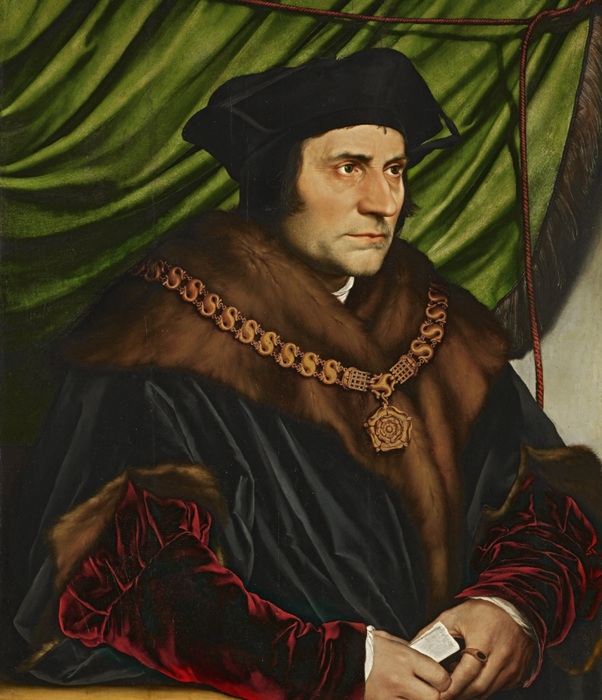
Thomas More
Thomas More (1478–1535) was an influential English statesman, lawyer, philosopher, and writer best known for his book Utopia. Born on February 7, 1478, in London, England, More became one of the most prominent intellectual and political figures of Tudor England. His writings explored politics, society, justice, education, morality, and the relationship between individual conscience and political authority.
More received an excellent education and studied at Oxford before pursuing a career in law and public service. He became a member of the English Parliament and eventually served as Lord Chancellor of England under King Henry VIII. Throughout his career, he was respected for his intelligence, legal knowledge, literary ability, and commitment to his personal principles.
Thomas More's most famous work, Utopia, was published in Latin in 1516. Written as a fictional dialogue, the book describes an imaginary island society in which property, government, education, work, and social organization differ significantly from those of contemporary Europe. Through this fictional society, More examines political institutions, poverty, inequality, crime, justice, and the organization of an ideal community. The word “utopia”, derived from More's title, has since become part of the English language.
More's political career came into conflict with King Henry VIII when the king sought to have his marriage to Catherine of Aragon annulled and to establish himself as head of the Church of England. More refused to approve the king's actions and declined to take the required oath recognizing Henry's supremacy. He was imprisoned, convicted of treason, and executed on July 6, 1535.
Thomas More's literary and historical legacy has remained significant. His Utopia is regarded as a foundational work of political philosophy and utopian literature, while his life has been remembered as an example of the conflict between personal conscience and political power. Today, More remains an important figure in English intellectual history, particularly for his contributions to political thought, humanism, literature, and the discussion of justice and social organization.